

HOW DID I COME TO LINK ASANAS, CHINESE MERIDIANS AND MYOFASCIAL TRACTS?
Several years ago, whilst studying at the School of Traditional Chinese Medicine, I realised that yoga asanas had an effect on specific meridians. This was a real revelation for me, as the description of the nadis (energy channels) in the Indian tradition is very brief in yogic literature; and by drawing on Chinese knowledge, I was able to work with my students on therapeutic yoga at an energetic level, based on Chinese Energy Anatomy.
I observed the effects of the asanas on my body and how they related to the organs, the seasons, and so on. I read and researched everything I could in the literature of the time. At that time, Yin Yoga was virtually unknown in Spain. I had been researching and running workshops on Seasonal Yoga based on Ayurveda for some time. One of the recommendations of this medical science is the practice of lateral bends and twists in spring to help the liver detoxify. Both the Liver Meridian and the Gallbladder Meridian affect the sides of the body, one internally and the other externally. This spurred my research because I felt and observed that energy circulation and the seasons had a great deal to tell us about the type and method of practising asanas.
I came across a book on Kundalini Yoga (I can’t remember the title…) which, in its final chapter, linked certain asanas to Chinese meridians. Wow! I loved that. My observations and conclusions weren’t off the mark after all. Shortly afterwards, in a bookshop, I found the wonderful book by Hiroshi Motoyama and Mario Lamberti “Chakras, Kundalini and the Subtle Energies of the Human Being”. In addition to exploring the chakra system in depth and detailing some scientific experiments on the subtle body, the book drew parallels between chakras, nadis and Chinese meridians. Whilst it is true that I do not entirely agree with the comparisons drawn, the contribution made by these authors opened up a field of study that was unprecedented for the time and encouraged me to continue my research.
Subsequently, the books in the “Yoga as Therapy” series by Doug Keller made me realise that the “Chinese Meridians” not only influence energy and emotions but are also fundamental to structural work and postural alignment, thanks to their link with the myofascial pathways. Following the publication of the popular book by Thomas Myer, researchers such as Helen Langevin were beginning to carry out scientific research into the relationship between fascia and acupuncture. I couldn’t believe it… I found it fascinating to think of all the insight this information could offer us as yoga practitioners.
And then, I came across the book *Meridian Yoga* by Daniel Orlansky, “Acu-Yoga” by Michael Redd Gach and, of course, “Yin Yoga” – I bought several books on the subject and later trained with Paul Grilley, the creator of the functional aspect of Yin Yoga. I researched everything I could about Yin Yoga to see if it would offer me new insights into how to work the meridians through yoga. I was fascinated by the practice of Yin Yoga, but… I felt that:
– On the one hand, the Yin Yoga courses and books of that time did not go into Chinese medicine in as much depth as I would have liked. Apart from touching briefly on the Five Elements and the Main Meridians, they did not provide any information on other key concepts essential to understanding therapeutic and spiritual work, such as the Three Treasures or the Three Fundamental Substances; nor did they explore the Elements in depth, their archetypal tendencies and their manifestations in terms of deficiency and excess, nor did it explain in detail how to influence the Extraordinary Meridians or how to incorporate energy points.
– On the other hand, the Taoist view is that Yin cannot be separated from Yang. For me, it was essential to have an active, invigorating tool that would also influence the meridians and the elements. In other words, which asanas should I practise, and how, to move energy and blood along a meridian? How can I improve the physiology affected by a deficient element? How can I regulate the psychological balances caused by imbalances in an Element through yoga? How can I practise Seasonal Yoga, taking into account both stillness and movement? Answering these questions was essential for me if I wanted to create a holistic, personalised and seasonal practice. To answer them, I designed the entire TCMYoga Yin and Yang Yoga practice.
But let’s take a closer look at what the meridians and channels are, and how they are related:
WHAT IS THE THEORY OF MERIDIANS ACCORDING TO TCM?
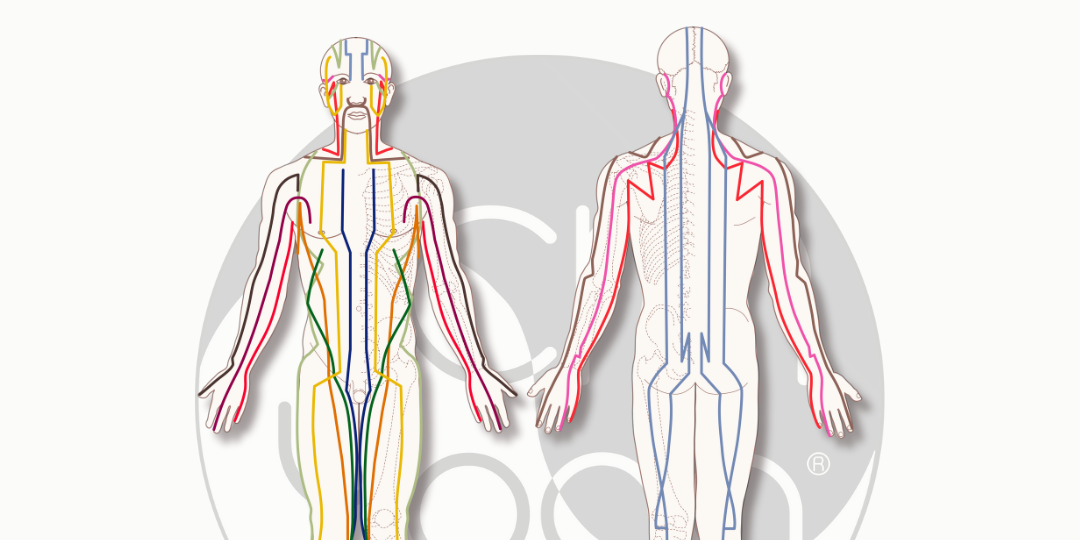
In TCM, we define what is known as the “THEORY OF MERIDIANS (JING LUO)” based on a detailed description of the circulation of energy through an organism to keep it alive. Through this network of channels, Energy (Qi) and Blood (Xue) circulate, connecting the Surface (Biao) with Depth (Li), the High (Shang) with the Lower (Xia) and the Organs (Zang) with the Innards (Fu). In other words, it “nourishes” us in three dimensions to keep our body functioning as a “unit”, an interwoven “whole” that allows all its parts to interact (that sounds a lot like “fascia”, doesn’t it?).
The entire meridian system is key to maintaining balance in our bodies at all levels (physical, energetic, emotional and spiritual). Just as rivers flow across the Earth’s surface and can run dry or carry too much water and burst their banks, our channels can exhibit signs of excess or deficiency, which can be regulated by working on them through needling or applying pressure to key points known as acupuncture points – and, of course, by working with the body itself.
Types of meridians
Many people have heard of the Main Meridians, but there are other meridians that are very important for enabling us to function as holistic beings.
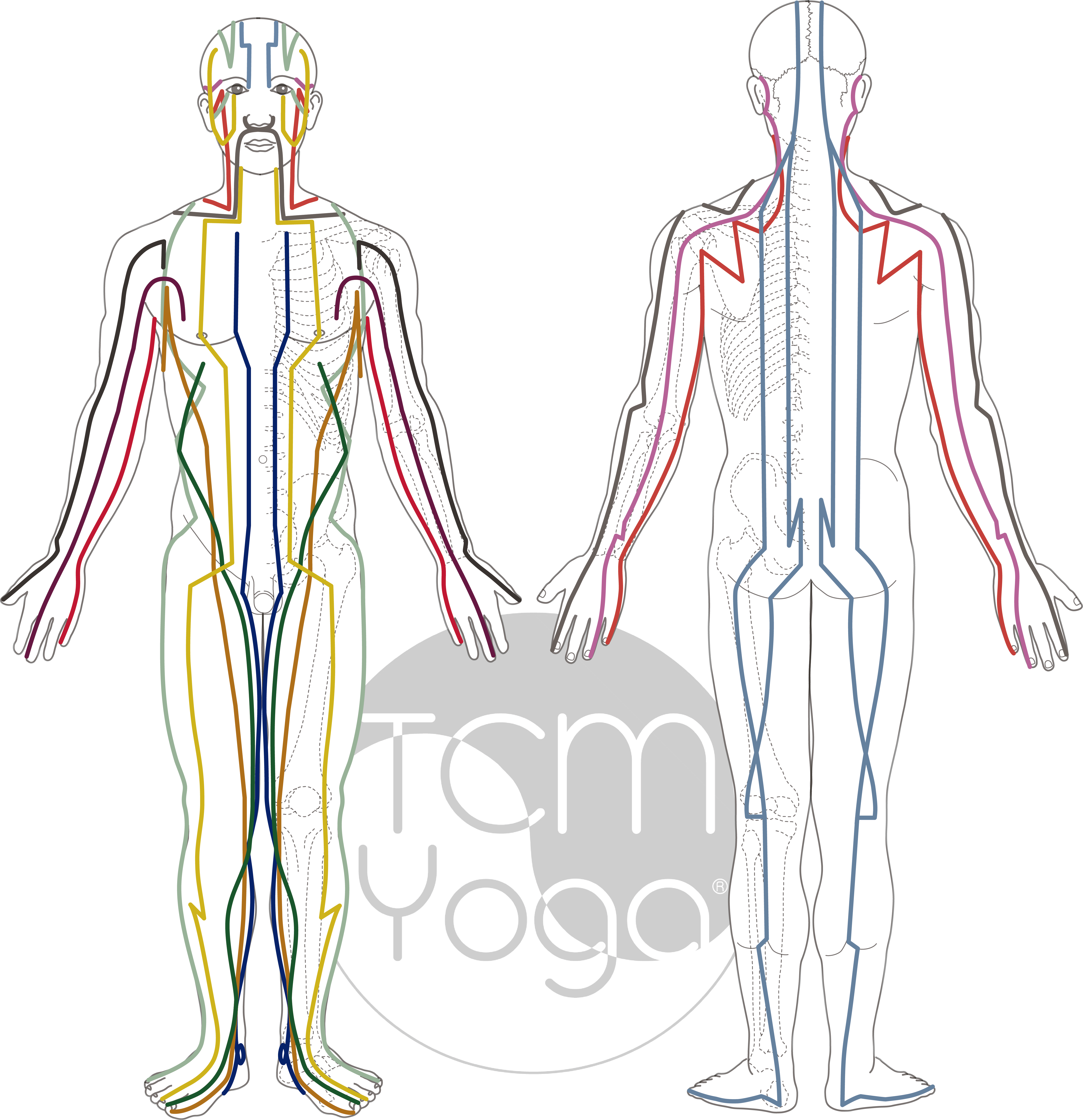
12 Main Meridians (Jing Mai)
These are the meridians that are formed after birth (Posterior Heaven), and their function is to move energy to nourish vital organs (ZangFu) which carry out physical and physiological functions as well as emotional and mental ones. They are also the most commonly used in clinical practice, as they contain the majority of acupuncture points.
Understanding them is essential for the practice of Yin and Yang Yoga in the TCMYoga® methodology
12 Divergent, distinct channels or internal branches (Jing Bie)
But the Main Meridians, if you look closely, do not reach the internal level where the organ with which they are associated is located. To achieve this, we have a whole network known as Divergent, Distinct or Internal Branch channels, which enable the Main Meridian to be connected to its associated organ; in other words, they connect the outside with the inside. For example, it connects the Liver Meridian (which runs along the inner side of the leg, the genitals and the sides of the body) – the course of which lies at the level of the muscles – with the Liver organ internally.
8 Extraordinary Meridians (Ba Mai)
These meridians are formed in the womb and carry all the genetic predisposition, karma and what the Chinese call “fate”. In them, we can see epigenetics, social changes, our traumas, etc., which store the samskaras and the imprints of our soul.
They regulate the activity of the main meridians along which they run, and draw energy from the surplus energy of the main meridians. Only two of these have their own points (Ren Mai and Du Mai), run through the central parts of the body at the front and back (along these, ancient India described the famous chakras) and it is through them that we practise the Microcosmic Orbit.
These 8 meridians are: Du Mai (Governor Vessel), Ren Mai (Conception Vessel), Chong Mai (Penetrating Vessel), Dai Mai (Belt Vessel), Yin Qiao Mai (Ascending Yin Vessel of the Foot), Yang Qiao Mai (Ascending Yang Vessel of the Foot), Yin Wei Mai (Yin Union Vessel), Yang Wei Mai (Yang Union Vessel).
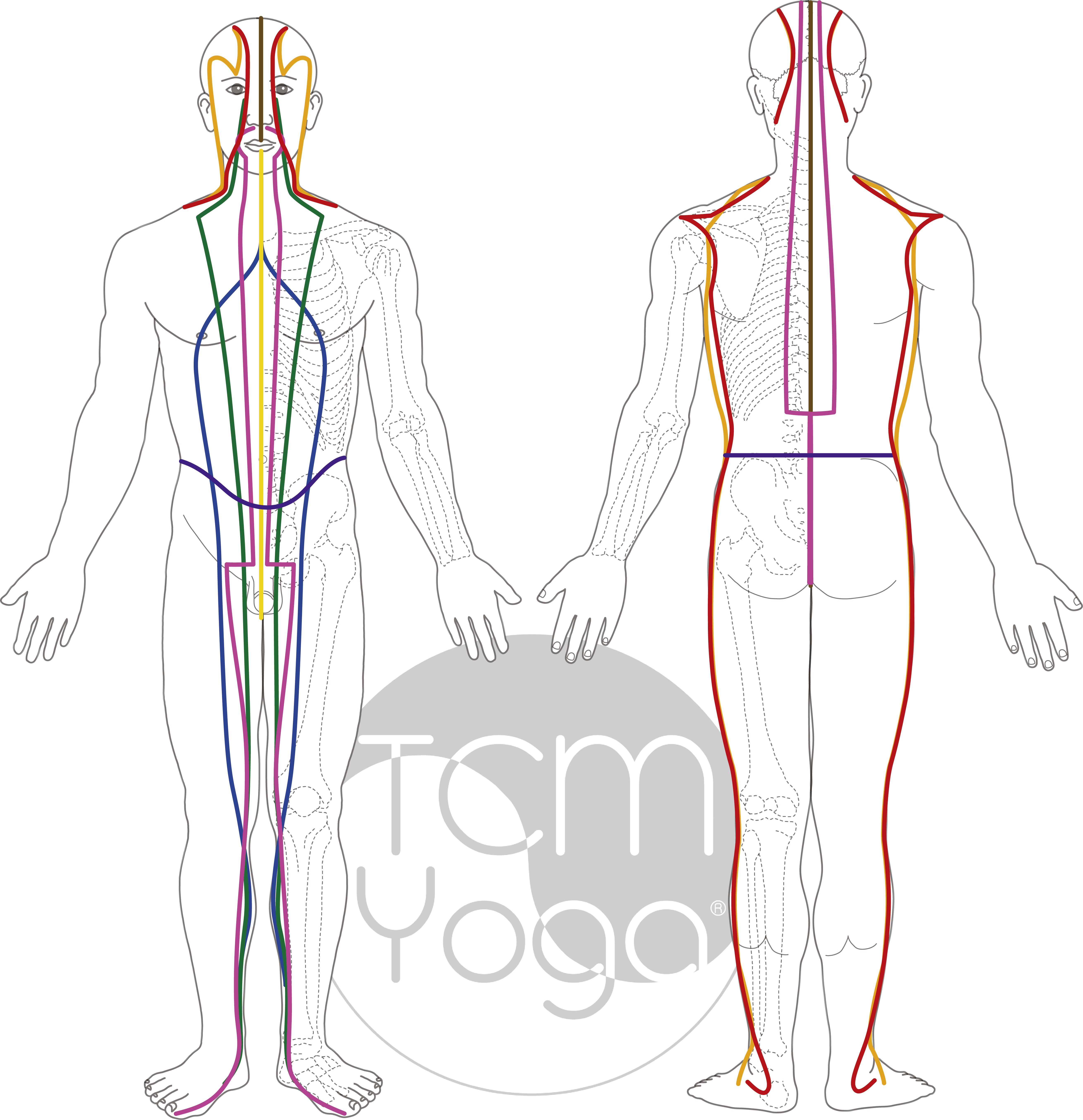
15 different collateral channels or Luo channels (Bie Luo, Luo Mai)
The collateral branches serve to connect meridians of the same Element (that is to say, in the case of the Wood element, connecting its Yin Liver meridian Yin with its Yang Gallbladder meridian). There are 15 of them because there is one for each main meridian, one for Ren Mai, one for Du Mai and one large collateral for the Spleen.
12 Tendinomuscular Meridians (Jing Jin) / 12 Skin regions (Pi Bu) / 12 Waterways (Jing Shui)
These are routes or areas similar to the Main Meridians, but more superficial, as they circulate through the epidermis and dermis. It is in these areas that acute and sudden conditions, such as a sprain, manifest themselves, and it is in these areas that we stimulate the superficial receptors when practising Gua Sha
MYOFASCIAL TRACTS and CHINESE MERIDIANS
Myofascial pathways are chains of fascial tissue, located at an intermediate depth, which form networks through muscles, tendons and ligaments. They are essential for enabling us to perceive our body as a whole, maintain healthy posture and move harmoniously.
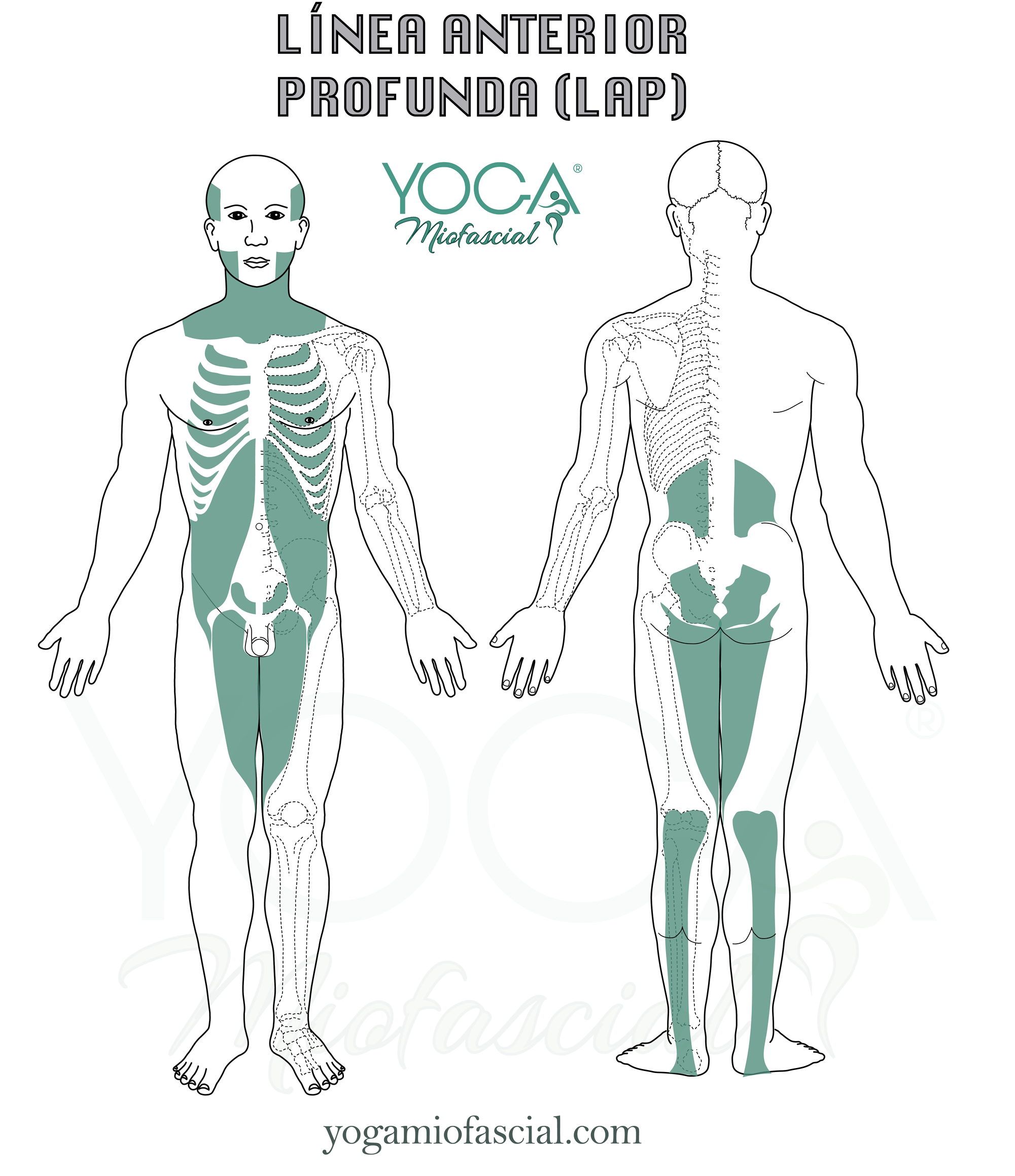
When I began studying fascia and myofascial pathways, I realised that they bore a striking resemblance to the course of the Chinese meridians, leading me to conclude that they were the “physical” pathways through which energy flows. That is to say, it is not that the Chinese meridians are the myofascial pathways. In my interpretation, myofascial pathways are material, tangible and palpable, and we find them in the physical body, whilst we cannot physically isolate the meridians but can perceive their “effect”, that is to say, we can measure and observe the “result” of the manifestation of energy through the resistivity and conductivity in the fasciae.
The work of authors who investigated the link between myofascial pathways and meridians served as the basis for establishing the foundations of TCMYoga®, namely:
– In 1986, Stanley Rosenberg (a Rolfing practitioner) suggested that the acupuncture meridians form a map of the fascial planes.
– Dick Larson, an acupuncturist and Rolfing practitioner, wrote an article in 1990 discussing the link between myofascial pathways and acupuncture meridians. He himself highlights the research of Kiiko Matsumoto and Stephen Birch according to which fascia possess special qualities, properties or functions that were recognised by physicians of the Han Dynasty.
– Helen Langevin (2002) and her colleagues demonstrated that the insertion and manipulation of acupuncture needles produce changes in cells that are transmitted via connective tissue or fascia. They argue that acupuncture meridians correspond to the anatomical planes of connective tissue.
– In 2003, Hiroshi Motoyama establishes a correlation between the Ayurvedic nadis and the Chinese meridians, and states that the two are equivalent and are composed of connective tissue and filled with bodily fluid.
– In 2009, Peter Dorsher sets out the following correspondence between acupuncture meridians and myofascial pathways:
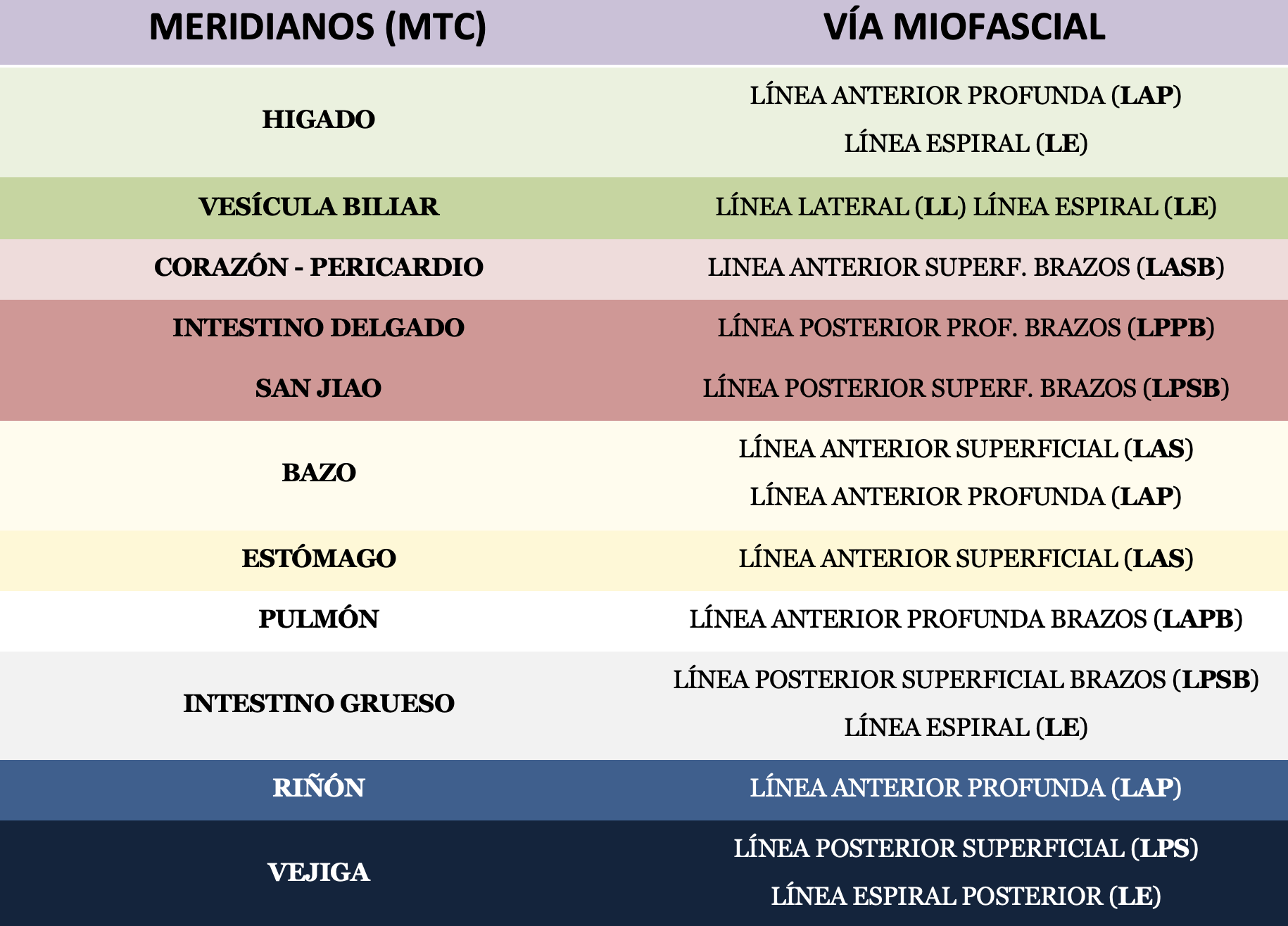
Superficial Posterior Line – Bladder
Superficial Anterior Line – Stomach, (Spleen)
Deep Anterior Line – Kidney, (Liver)
Lateral Line – Gallbladder
Spiral Line (anterior) – Stomach
Spiral Line (posterior) – Bladder
Deep Anterior Arm Line – Lung, (Large Intestine)
Superficial Anterior Arm Line – Pericardium (Heart)
Superficial Posterior Arm Line – San Jiao
Deep Posterior Arm Line – Small Intestine
In June 2015, having read all these papers, I published a post on an old blog in which, for the first time in Spain, a link was established between myofascial pathways and Chinese meridians -> ARTICLE
After researching, reading, experimenting on myself and my students, and taking into account the physical and emotional effects, I established the following connection, which is what I offer through the TCMYoga® methodology. I have also established a connection with the 12 Nadis (which we explore in depth in AyurYoga®) as well as with the Thai Sens (in Myofascial Yoga®), but we’ll leave those connections for another article… :-).
YIN AND YANG ASANAS
Ultimately, I had to apply all this knowledge to yoga and therapeutic yoga. Everything I had explored in depth – not only myofascial pathways but also fascia in general and its influence on our body and mind, as well as the various techniques that stimulate the fascia to achieve different benefits – led me to develop Myofascial Yoga®. Likewise, all the information I had on Chinese Energy Anatomy, physiology and the psyche enabled me to develop TCMYoga®, in which we take an approach that encompasses both Yin and Yang meridians.
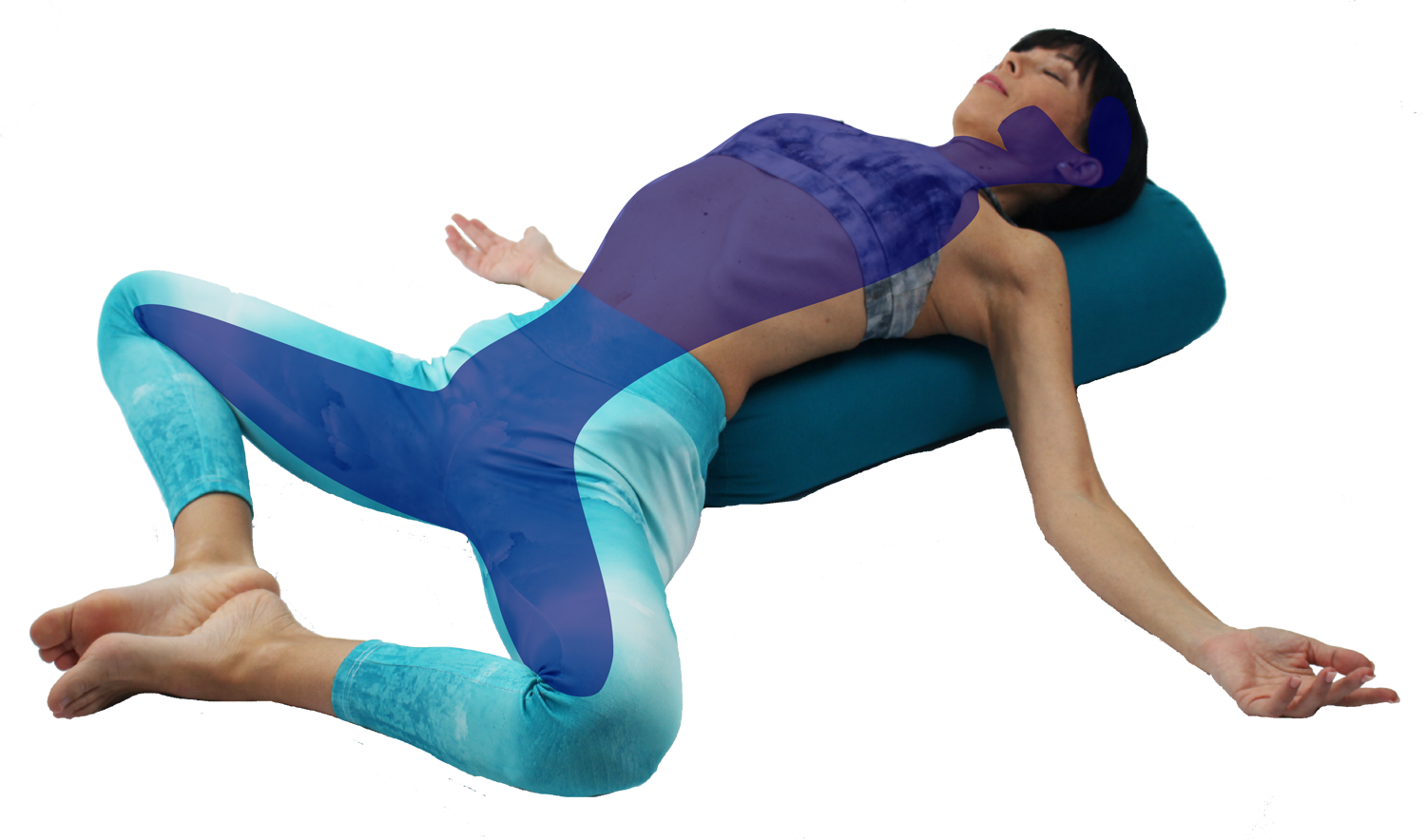
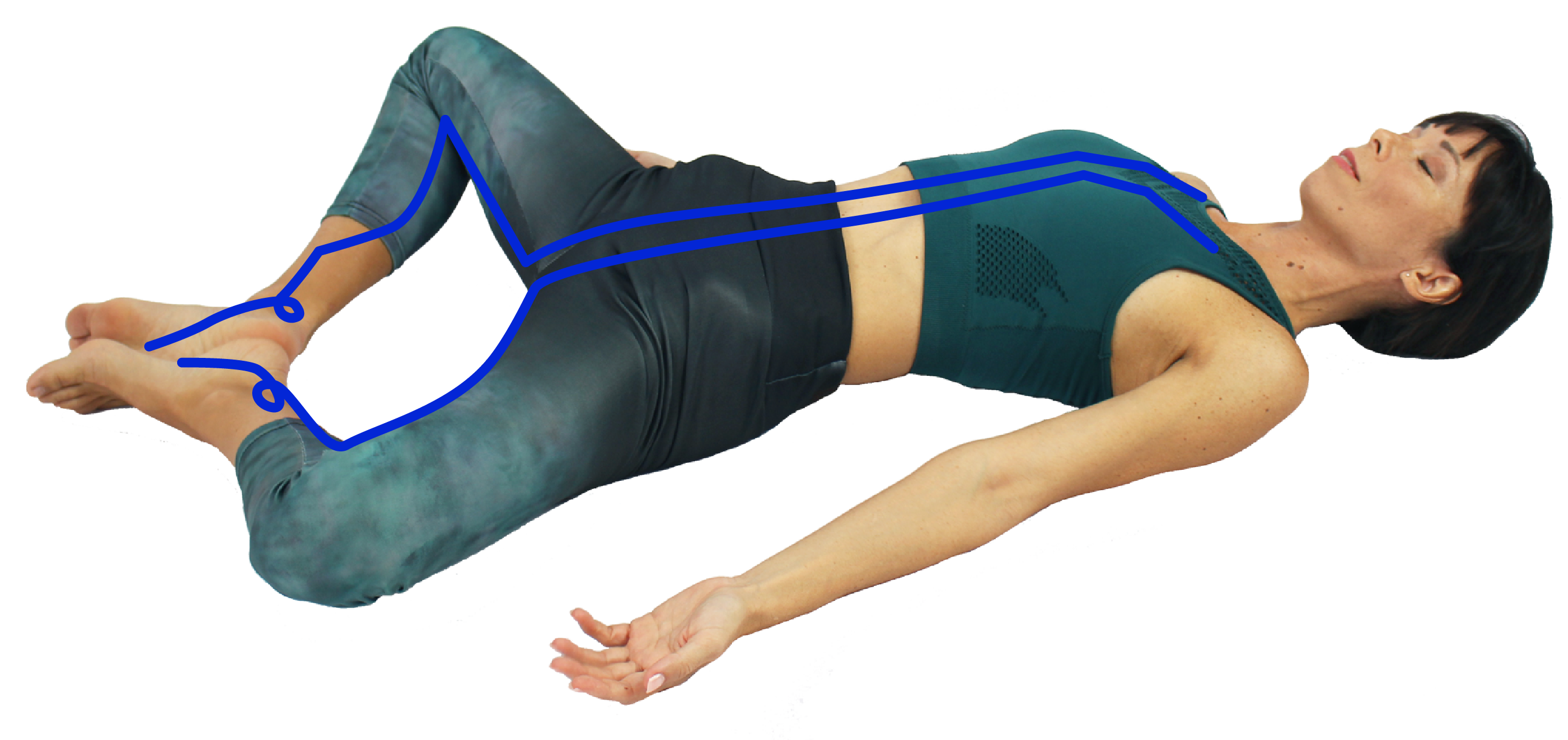
In these images you can see how the DEEP ANTERIOR TRACT (LAP) can be opened up and stretched with restorative poses such as Supta Baddha Konasana. I associate this internal fascial chain with three meridians, which are known in TCM as the Yin meridians of the legs: Liver, Spleen and Kidney. In the photo on the right you can see “Butterfly” and the route of the Kidney Meridian.
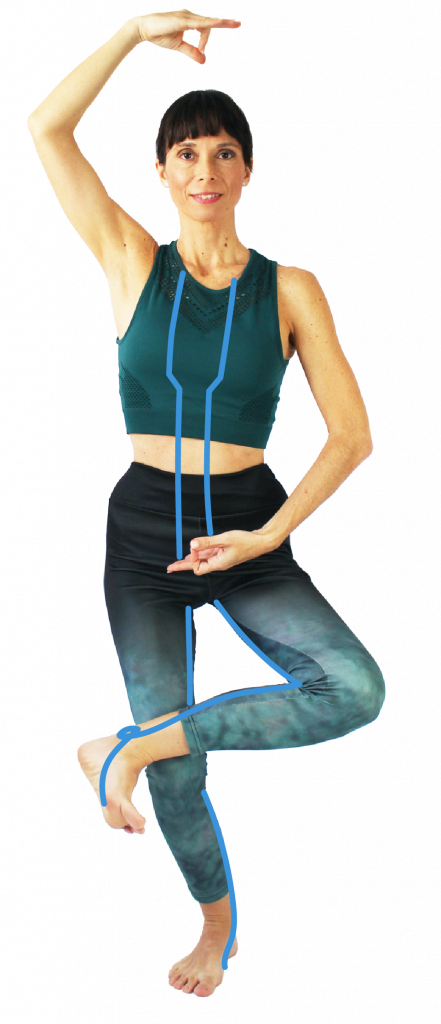
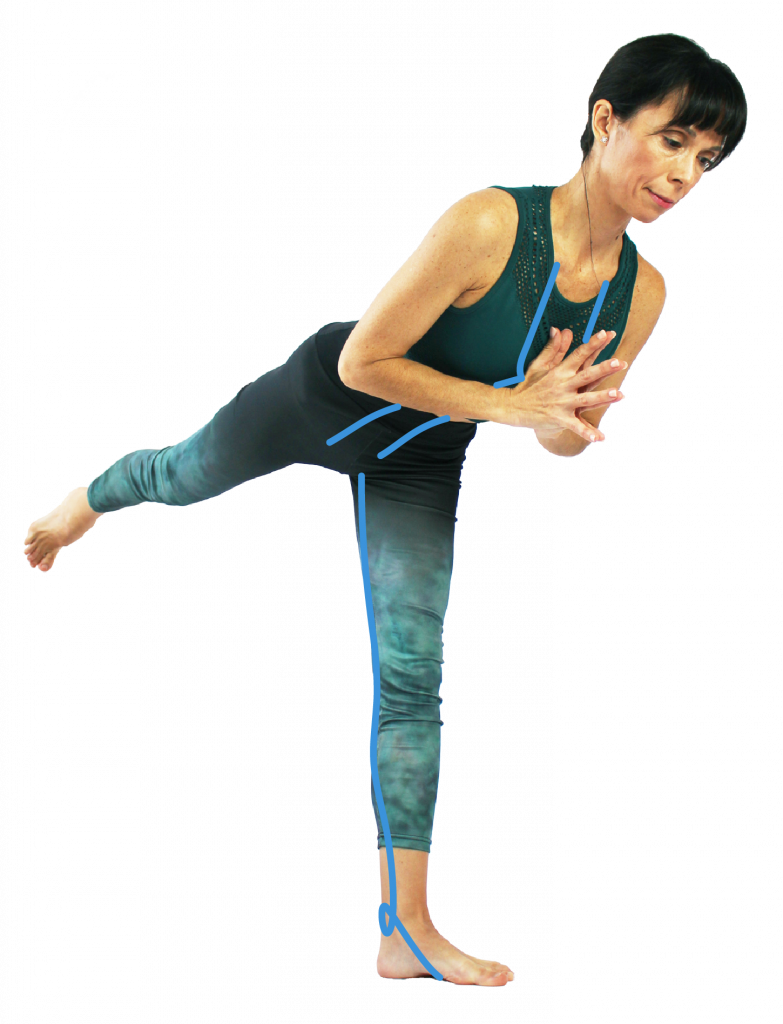
But as I mentioned earlier, these chains are not only stimulated through passive static work. Scientific research into fascia shows us that, depending on the type of exercise you do, the fascia derive different benefits, stimulating different fascial receptors. In Yin Yoga, the main benefit is hydration. However, in dynamic Yang practices (Yang Flow), we improve proprioception, coordination and fascial sensitivity, whilst in static Yang practices (Yang Core) – based on static and toning work – we are able to reshape our bodies, regenerate our joints and achieve a biotensegrity balance. We work on this in TCMYoga® through both dynamic and static Yang practice, which, in the Kidney Meridian, would be:
If you’re interested in exploring this holistic approach to the human body in greater depth, please visit the website for our Advanced Holistic Yoga® Programme, which offers training courses and specialisation modules covering the following subjects: www.holisticyoga.com.es
© This information is protected by copyright. If you intend to share it, please cite the methodologies on which it is based and the author: Dr Helena Chacón