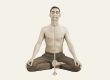



By Javier Muriel, founder of Pranayam®
Anyone who practises yoga is familiar with the bandhas: conscious muscular actions that help to contain, direct or stabilise the breath and prāṇa. The best known are Mūla Bandha (pelvic floor), Uḍḍīyāna Bandha (abdomen) and Jālandhara Bandha (throat), and in āsana practice, Pāda Bandha and Hasta Bandha are also used, in the feet and hands respectively.
There is a lesser-known lock that proves very useful in pranayama and meditation: Jivha Bandha, the tongue lock.
Jivha Bandha: the tongue lock
Jivha means ‘language’ and bandha, closure. This involves resting the tip of the tongue against the hard palate, just behind and above the upper incisors.
It is a small gesture with a clear effect: the breath becomes more steady and the mind more calm. That is why I use it mainly during meditation and in the more subtle stages of pranayama.
You can go deeper by pressing the rest of your tongue against the roof of your mouth, with a gentle suction, and opening your mouth. This gently stretches the frenulum and prepares the tongue for the following mudras.
Nabho Mudrā: the tongue against the soft palate
The Gheraṇḍa Saṃhitā (III.9) describes Nabho Mudrā: performing whatever action one is doing with the tongue turned upwards, towards the soft palate, whilst holding one’s breath.
Tradition links him with the amṛta, the «nectar» which, according to the texts, flows down from the head and which this gesture is said to help preserve. It is a symbolic image; in practice, Nabho Mudrā intensifies the effects of Jivha Bandha on the stillness of the breath.
Khecarī Mudrā: the advanced form
The Haṭha Yoga Pradīpikā (III.32) defines Khecarī Mudrā as curling the tongue backwards and inserting it into the cavity above the soft palate, whilst gazing between the eyebrows. The texts attribute to it very slow breathing and longer, more stable breath retention.
To achieve this, both the Pradīpikā (III.33–36) and the Gheraṇḍa Saṃhitā (III.25–32) describe a method of lengthening the tongue by gradually cutting the frenulum over a period of several months. We do not recommend this practice: Cutting the frenulum is a procedure that carries risks and is not necessary for using the tongue in pranayama. Jivha Bandha and Nabho Mudrā provide many of their benefits without any such procedure.
Language, Mind and Meditation
When the mind wanders, the tongue and eyes tend to move without us realising it. By holding the tongue in place with Jivha Bandha or Nabho Mudrā, that movement calms down and becomes easier to notice.
In practice, this translates into a more steady focus, a more refined breath and greater ease in holding the breath-retentions and meditating. I suggest you give it a go and see the difference for yourself.
To continue
- Measuring progress in the practice of pranayama
- Pranayam® HEY Training, Block 2: bandhas and kumbhaka.
Sources
- Svātmārāma, Haṭha Yoga Pradīpikā, Chapter III (III.32–36). Trans. Pancham Sinh, 1914.
- Gheraṇḍa Saṃhitā (III.9 and III.25–32). Translated by Srisa Chandra Vasu, 1914.
Holistic EcoYoga · A Holística Nature school